




Designing Workplaces That Support the Whole Person
As employees become more intentional about where and how they work, the role of the office is evolving. Today’s workplace must do more than support productivity—it must support people.

Organizations that invest in wellness-centered design are not only enhancing the employee experience, but also strengthening culture, improving retention, and positioning themselves more competitively in the market. As teams return to the office in new ways, the expectation is clear: the workplace should contribute to overall well-being, not detract from it.
A More Thoughtful Approach to Workplace Design
Wellness in the workplace begins with choice.
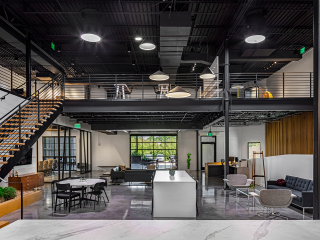
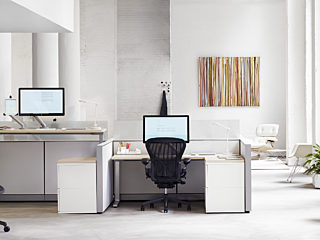
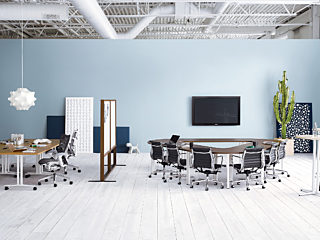
A thoughtfully designed office balances collaborative environments with spaces for focus and restoration, allowing employees to move seamlessly between different modes of work throughout the day. This flexibility supports both productivity and well-being, giving individuals the ability to choose the setting that best aligns with their tasks, energy, and preferences.
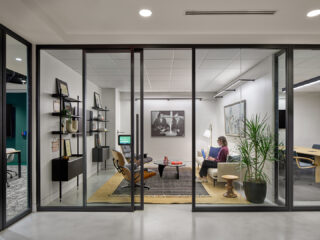
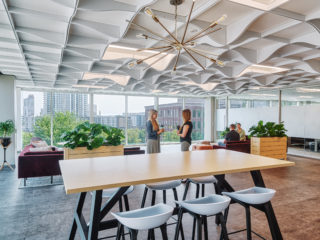
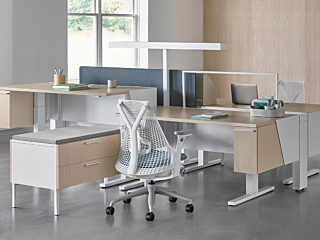
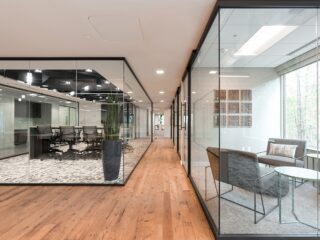
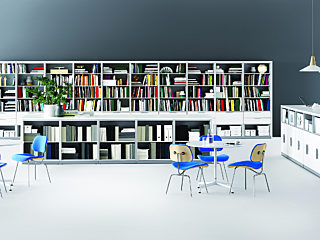
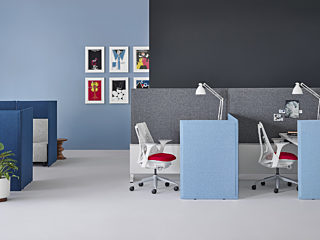
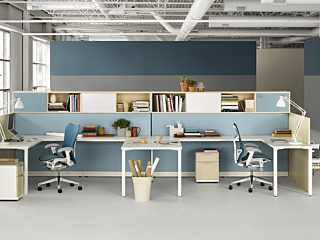
Focused work areas, for example, benefit from intentional placement and design. Positioning these spaces along the perimeter maximizes access to natural light and exterior views—both proven to support mental clarity and overall wellness. Interior zones can then be designed for quiet retreat, incorporating elements like phone booths, library-style nooks, and private workrooms that offer moments of pause within a dynamic environment.
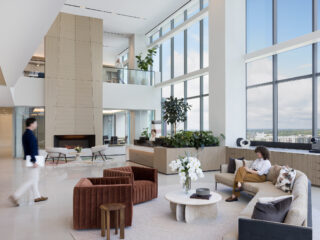
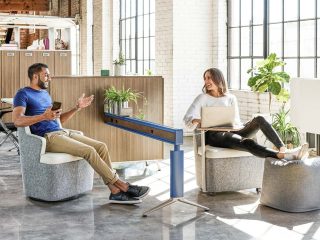
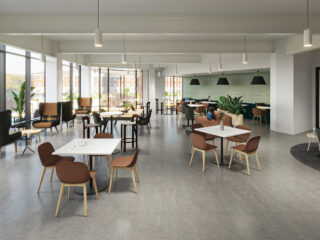
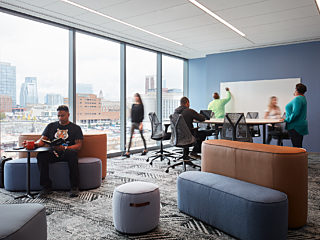
Equally important are spaces designed for connection. Cafés, lounges, and amenity-driven environments create opportunities for spontaneous interaction, collaboration, and relationship building. These moments not only spark creativity but also strengthen team dynamics and reinforce a sense of belonging.
Designing for a Range of Experiences
The most effective workplaces today are those that support a full spectrum of employee needs—focus, collaboration, movement, and rest.
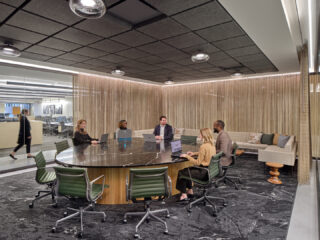
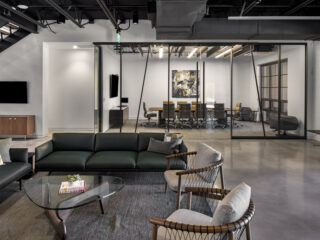
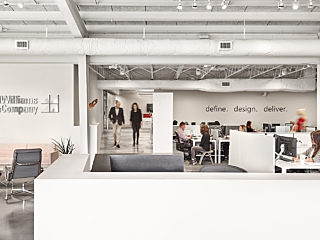
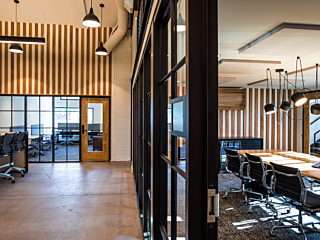
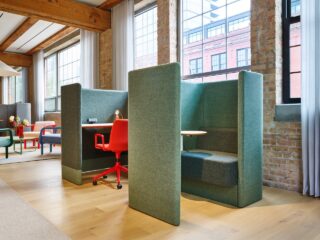
In a recent project for a confidential client, this approach came to life through a carefully balanced environment that integrates inviting communal spaces with dedicated areas for concentration. From soft seating and booth-style gathering areas to private offices and technology-enabled meeting rooms, each space was designed with purpose, allowing employees to engage with their environment in a way that supports their work and well-being.
The Role of Dedicated Wellness Spaces
Beyond the workstation, wellness is increasingly supported through dedicated, purpose-driven environments.
Landlords and organizations alike are investing in shared amenities such as fitness centers, wellness clinics, and recreational spaces, allowing individual workplaces to focus more intentionally on tailored experiences. Within the office itself, spaces designed for restoration are becoming essential.
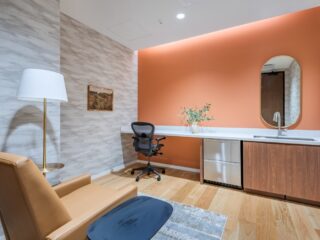
Tech-free zones, for example, offer employees the opportunity to disconnect and reset. Designed with natural materials, soft lighting, and biophilic elements, these environments create a sensory shift that helps reduce stress and improve focus.
Similarly, thoughtfully designed lactation suites provide a higher level of comfort, privacy, and functionality, supporting working mothers with spaces that are both practical and dignified. These considerations reflect a broader commitment to inclusivity and care within the workplace.
A Workplace That Supports the Whole Person
Wellness in the workplace is no longer a secondary consideration, it is a foundational element of effective design.
By creating environments that support movement, connection, focus, and rest, organizations can foster a culture where employees feel supported and empowered. The result is not only improved well-being, but also increased engagement, creativity, and performance.
The future of workplace design is centered on people. And when spaces are designed with that in mind, they become more than places to work, they become environments where individuals can truly thrive.